



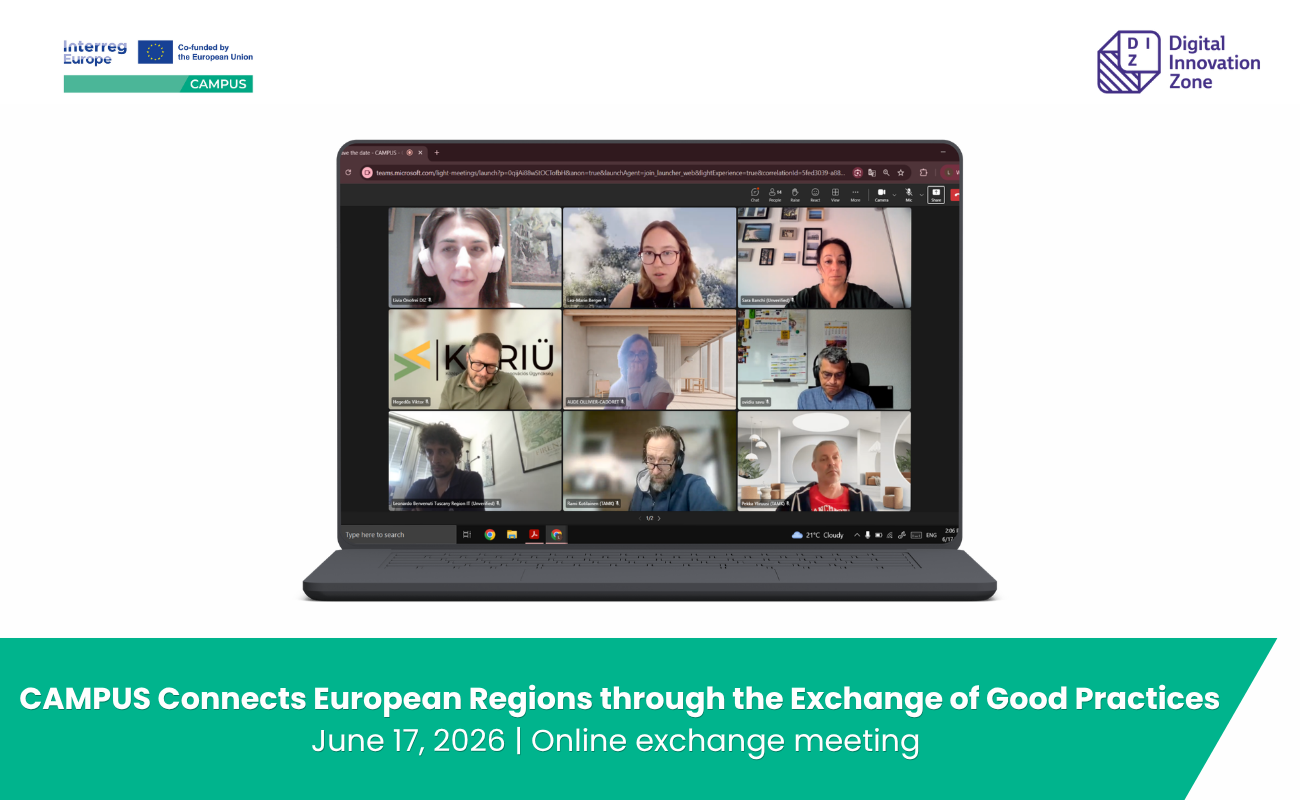
On 17 June, the CAMPUS project partners convened for an online meeting dedicated to showcasing good practices and regional initiatives developed within their respective ecosystems, with the aim of identifying models that can be transferred and adapted across other European regions. The meeting was highly interactive, with each presentation followed by a question-and-answer session and open discussions. Partners assessed the level of interest in each initiative and explored its relevance in addressing the specific challenges faced within their own regions.
During the meeting, Digital Innovation Zone presented the good practice “Enhancing Cybersecurity in North-East Public Institutions through Integrated Support Services”, which focuses on strengthening cybersecurity in public institutions across Romania’s North-East Region through the delivery of integrated support services. One of the key discussion points was the long-term sustainability of the initiative beyond the project funding period, highlighting that the services will continue through the activities carried out under EDIH 2.0.
The session also featured a range of good practices and regional initiatives addressing cybersecurity and digital transformation:
- BretagneNext (France) presented the initiatives Breizh CTF, Cyber Barometer, and NIS2 Observatory, focusing on cybersecurity skills development, cybersecurity maturity assessment, and supporting organisations in implementing the NIS2 Directive.
- North-East Regional Development Agency (Romania) presented the project Developing Strategic Planning Capacity and Implementing an Integrated IT System in Piatra Neamț Town Hall, showcasing how digitalisation can strengthen administrative capacity and improve public service delivery.
- Regional Agency for Development and European Integration Belgrade (Serbia) shared the experience of the 201:Go! Hackathon – Cybersecurity Innovation for Balkan SMEs, an initiative designed to foster innovative cybersecurity solutions and collaboration between experts and SMEs.
- Regional Government of Tuscany (Italy) presented Punti Regionali per le Competenze Digitali, a regional initiative supporting the development of digital skills and improving access to digital support services for citizens and organisations.
- Tampere Region (Finland) showcased the Tampere Region Safety and Security Cluster, a collaborative regional model bringing together public authorities, academia, and businesses to strengthen the safety and security ecosystem.
- Central Transdanubian Regional Innovation Agency – KDRIÜ (Hungary) introduced Alba Innovár and the Smart Classroom Model for Digital Resilience, an initiative promoting digital skills and cyber resilience through education and innovation.
- City of Rijeka (Croatia) presented the Shared On-Premise Cloud Centre project, a shared cloud infrastructure model providing digital services and technical support for public administrations and other organisations.
Beyond the presentations, the meeting created an opportunity for partners to discuss the conditions required for transferring and adapting these initiatives to other regions. The discussions covered topics such as funding models, stakeholder engagement, the long-term sustainability of the initiatives, and their potential integration into existing regional policies.
For Digital Innovation Zone, participation in these exchanges provides an opportunity not only to showcase the good practices developed in Romania’s North-East Region, but also to identify successful models that can be transferred and adapted locally. This collaborative process contributes to the development of services and initiatives that are better aligned with the needs of public authorities, businesses, and local communities.
The next stage of the project will take place on 22–23 September in Tampere, Finland, where partners will continue analysing the good practices identified so far and explore how they can be further capitalised through dedicated project workshops.
Through the CAMPUS project, the exchange of good practices among European regions contributes to the development of more effective cybersecurity policies and services by leveraging local expertise and facilitating the transfer of proven solutions across different regional contexts.