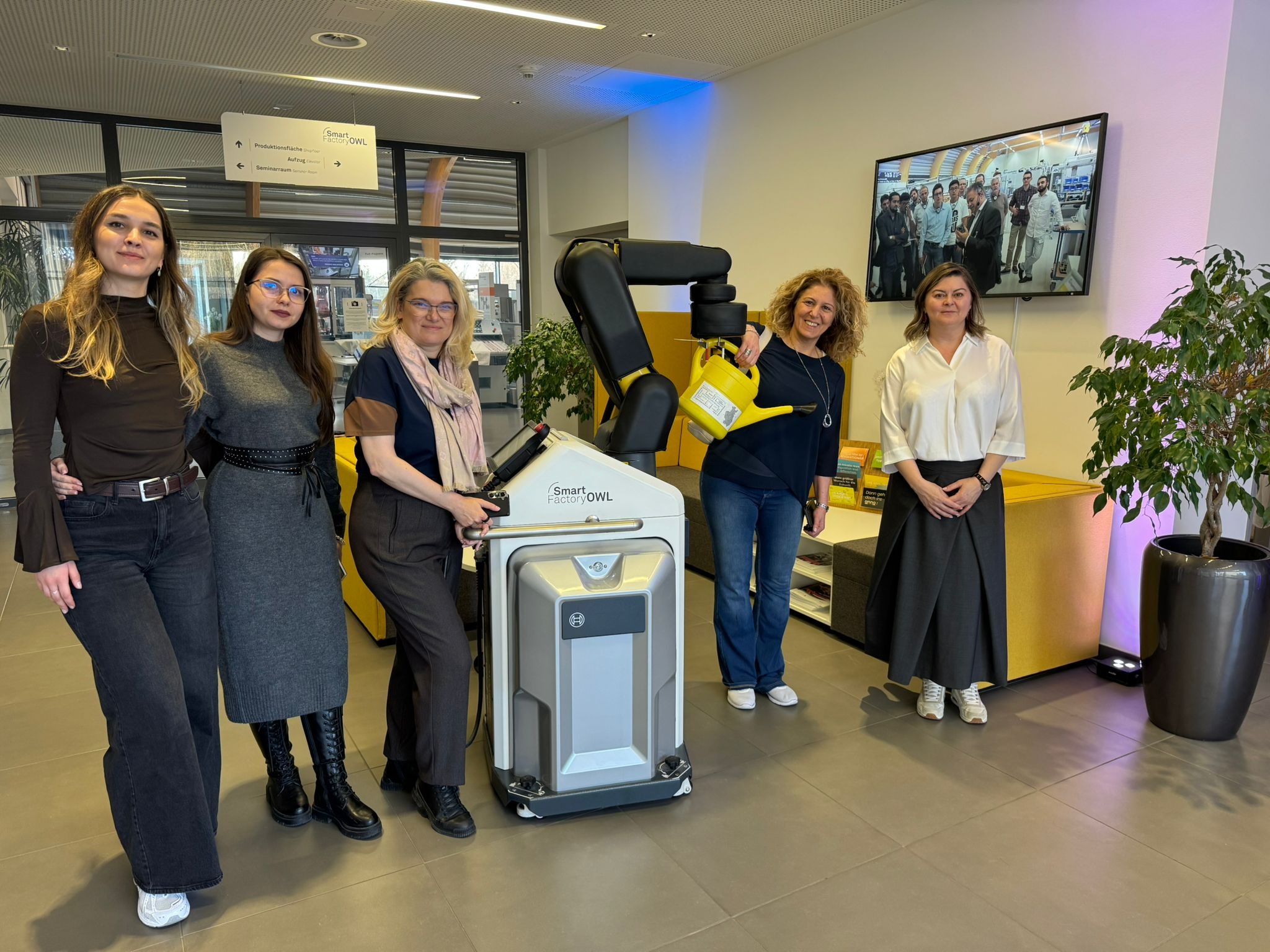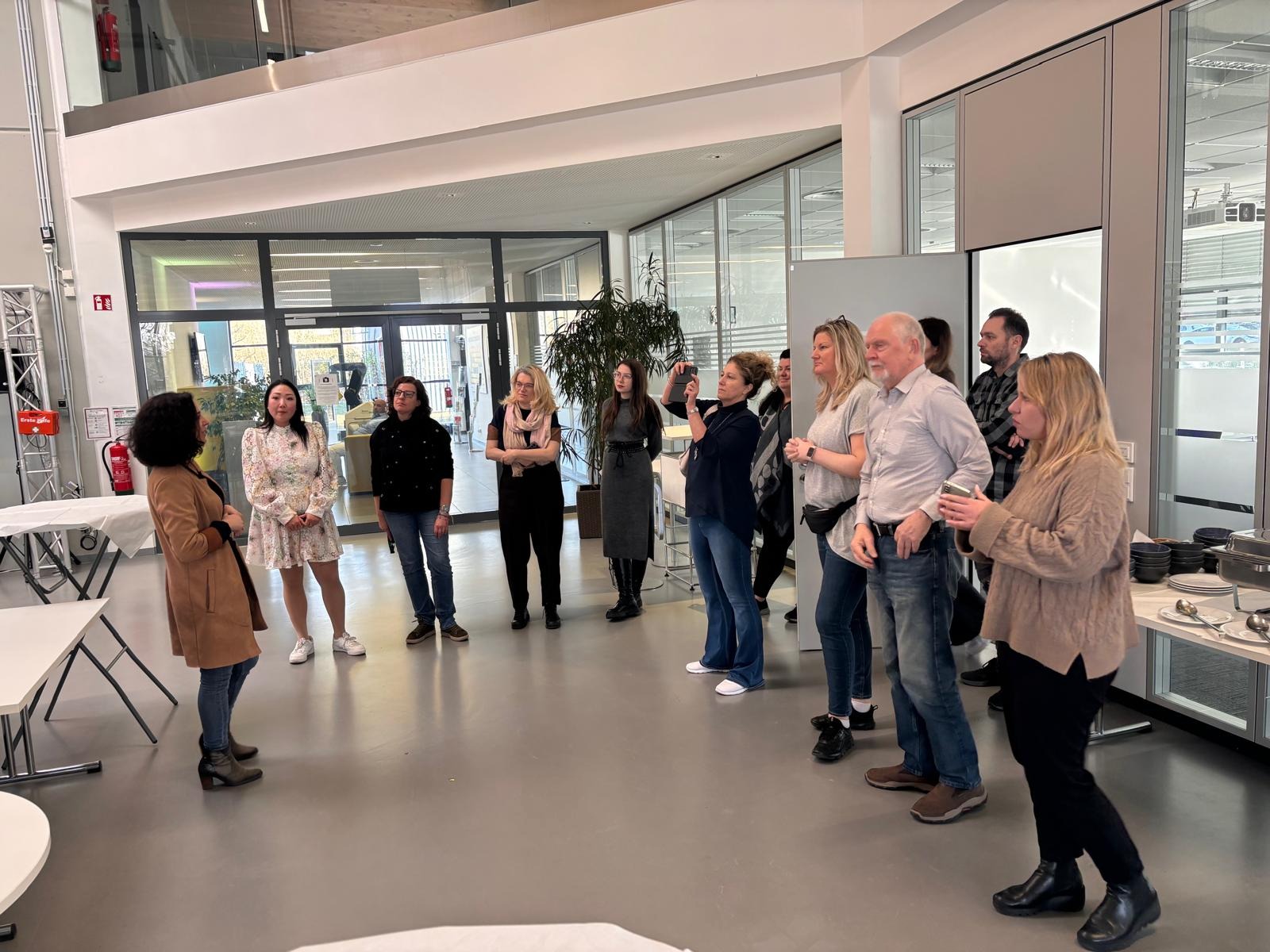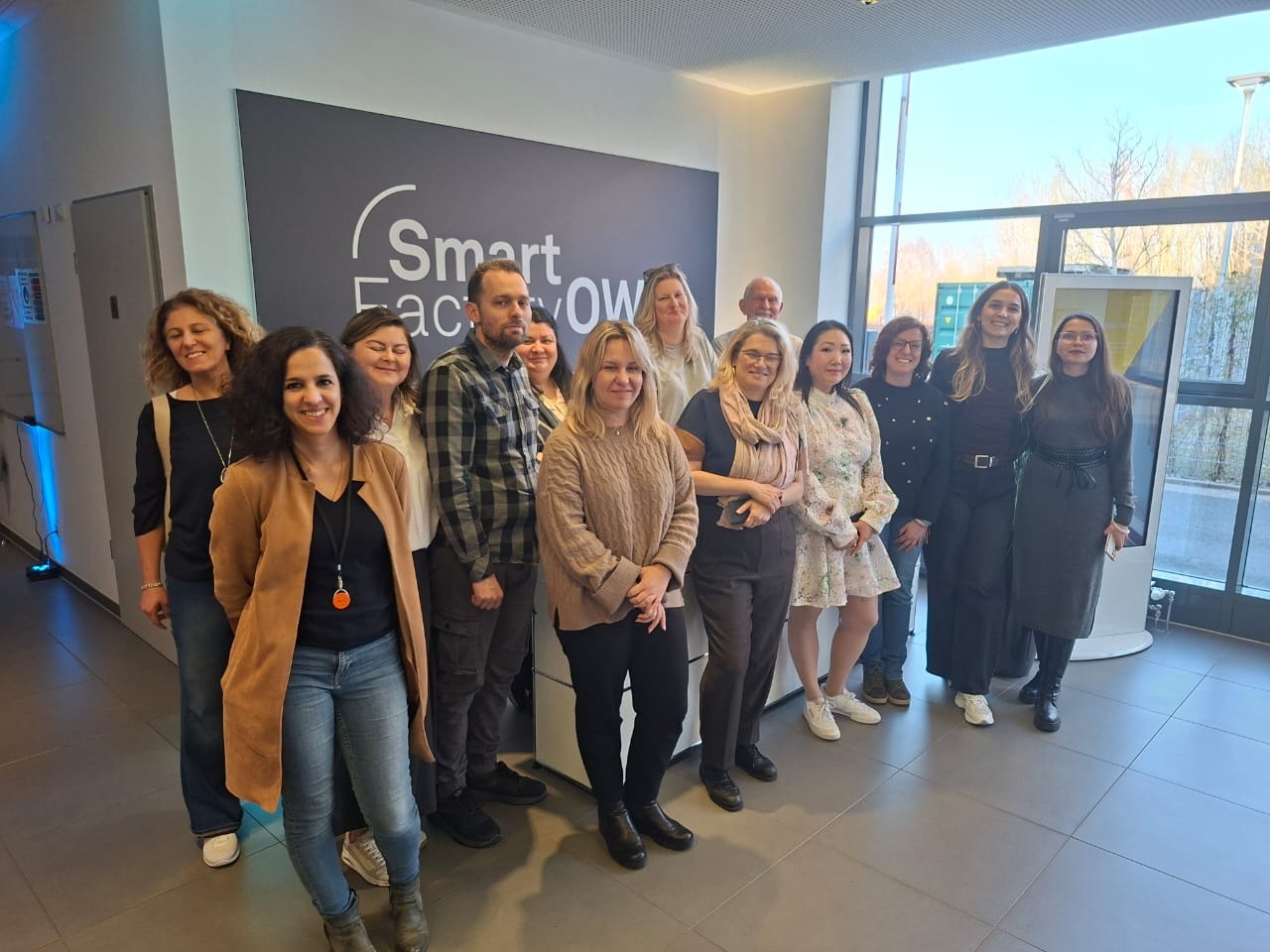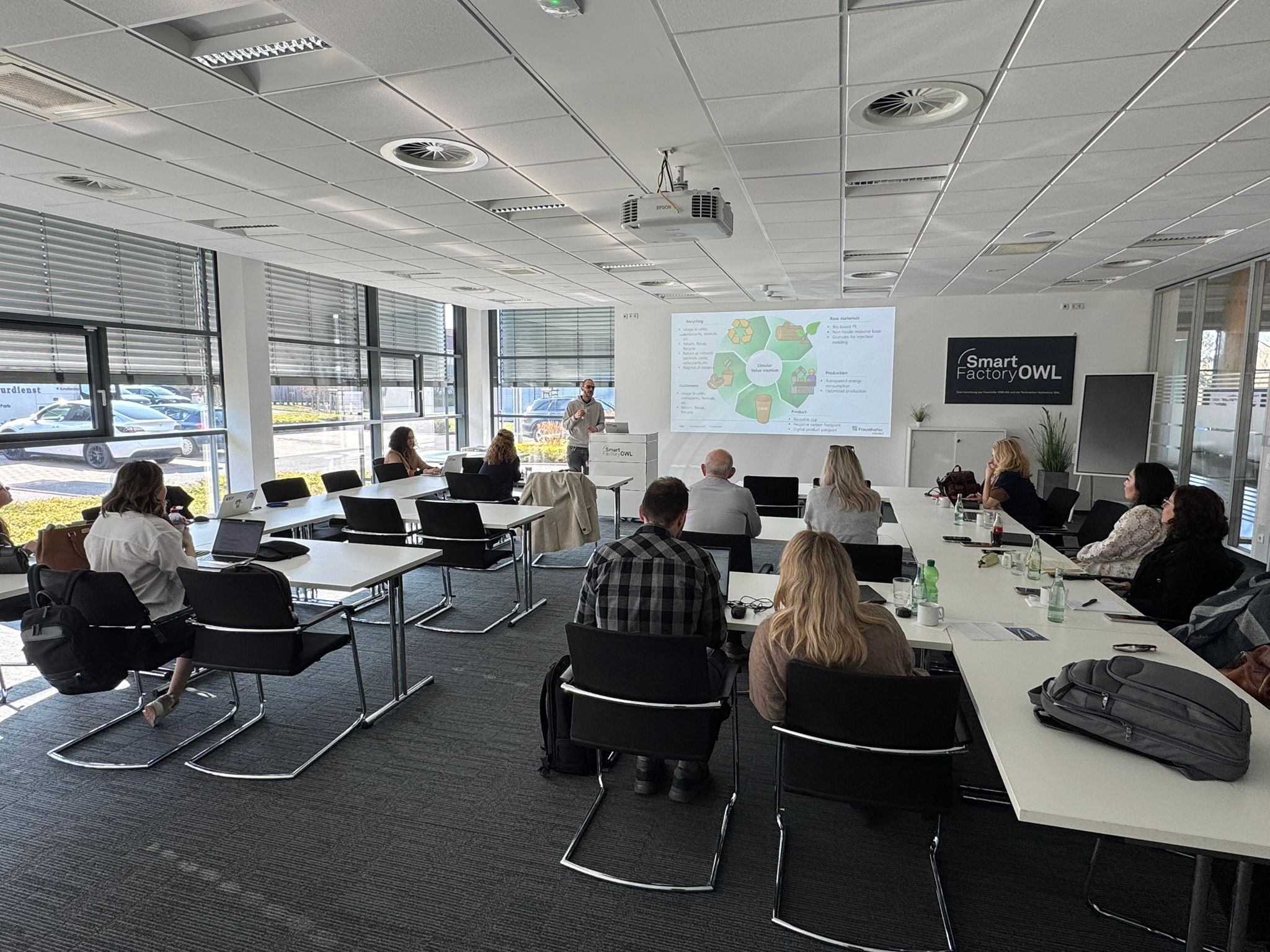


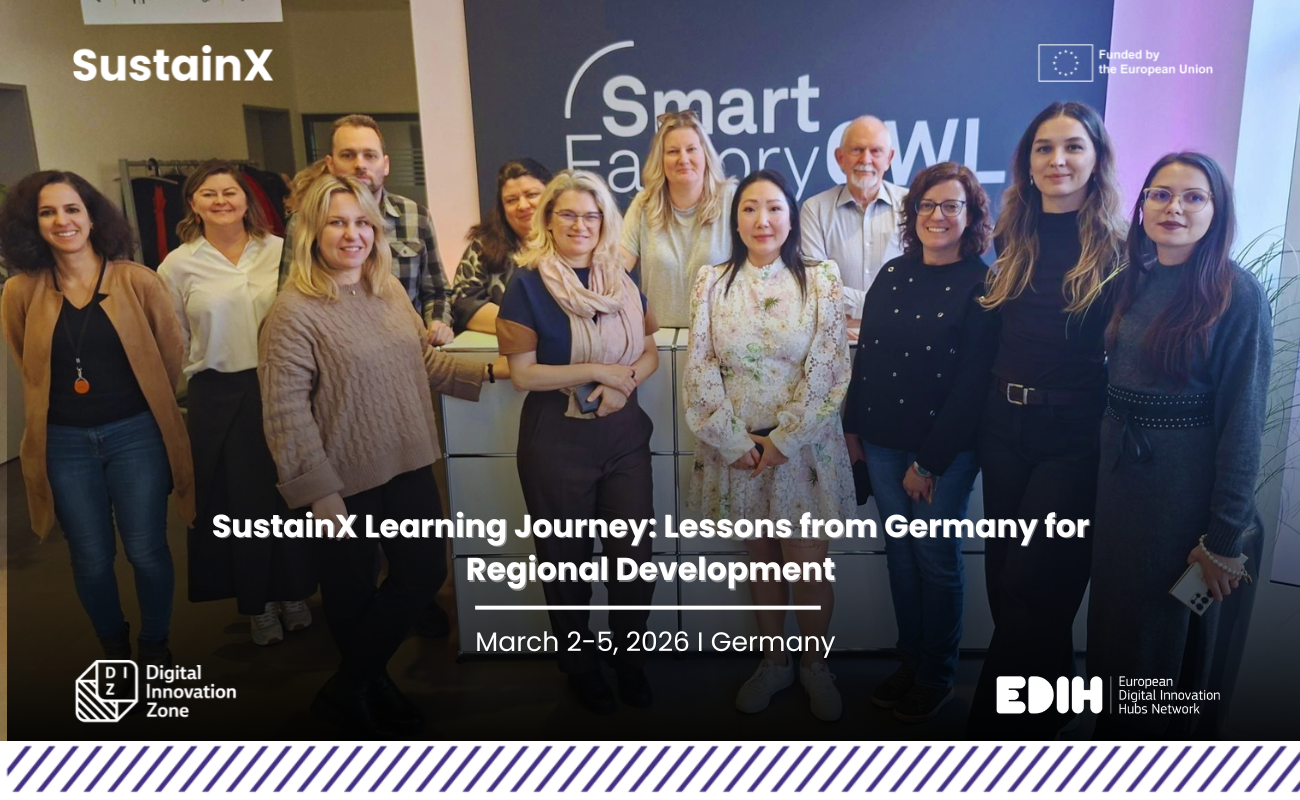
Between March 2 and 5, 2026, the SustainX consortium comprising Digital Innovation Zone, the “Gheorghe Asachi” Technical University of Iași (TUIASI), the Latvian Technological Center, the Applied Research and Communications Fund (ARC Fund), the iED – Institute of Entrepreneurship Development, and the Fundación Santa Cruz Sostenible, participated in a learning journey in Germany, hosted by IMP³ROVE. The primary objective of the visit was to explore best practice models in the development of innovation ecosystems, with a specific focus on supporting startups, digitalization, and the green transition of SMEs.
This experience provided a practical perspective on how collaboration among industry, research, the public sector, and entrepreneurship can accelerate regional innovation and competitiveness.
Innovation Ecosystems in Action
The visit included two representative organizations from the German ecosystem:
- STARTPLATZ Cologne – an innovation hub and startup accelerator.
- It’s OWL (Innovation Campus Lemgo) – an industrial cluster focused on Industry 4.0 and intelligent systems.
STARTPLATZ Cologne functions as a central hub for startups in the Rhine region, offering an integrated service package: incubation and acceleration programs, mentorship, access to investors, and coworking spaces. A key element observed was their community-based approach, which facilitates constant interaction among startups, investors, corporations, and public institutions. This type of hub plays the role of an innovation intermediary, connecting ideas with the resources needed to scale.
In contrast, the It’s OWL cluster represents a mature model of collaboration between industry and research, focusing on intelligent technical systems, artificial intelligence in manufacturing, digital twins, Industry 4.0, energy efficiency, and sustainability. The cluster brings together companies, universities, and research institutes, supported by a robust mixed-funding model. A major strength is the availability of advanced infrastructure, which allows SMEs to test technologies before deployment, thereby mitigating risks and accelerating innovation.
A common feature shared by both organizations is their heavy emphasis on technology transfer and collaboration through joint industry-university projects, mentorship programs, and capability building. These mechanisms facilitate the transformation of research into market-ready solutions and support SMEs in adopting emerging technologies.
Key Takeaways
- The Importance of Integrated Ecosystems: Success does not stem from isolated initiatives, but from well-connected ecosystems where stakeholders collaborate consistently.
- Strategic Nodes: Hubs and clusters function as strategic nodes that connect different actors, facilitating access to expertise, technologies, and funding.
- Infrastructure Matters: Campuses, laboratories, and hubs are essential for testing, collaboration, and co-creation.